Concrete Foundations: How Strength‑Based Mission Transforms Communities Over Time
In March 2026, ABM’s Meagan Schwarz led a pilgrimage to the Episcopal Church of the Philippines. While there, they visited a community that participated in an ABM funded project in the early 2000s. Meagan reflects on that visit.
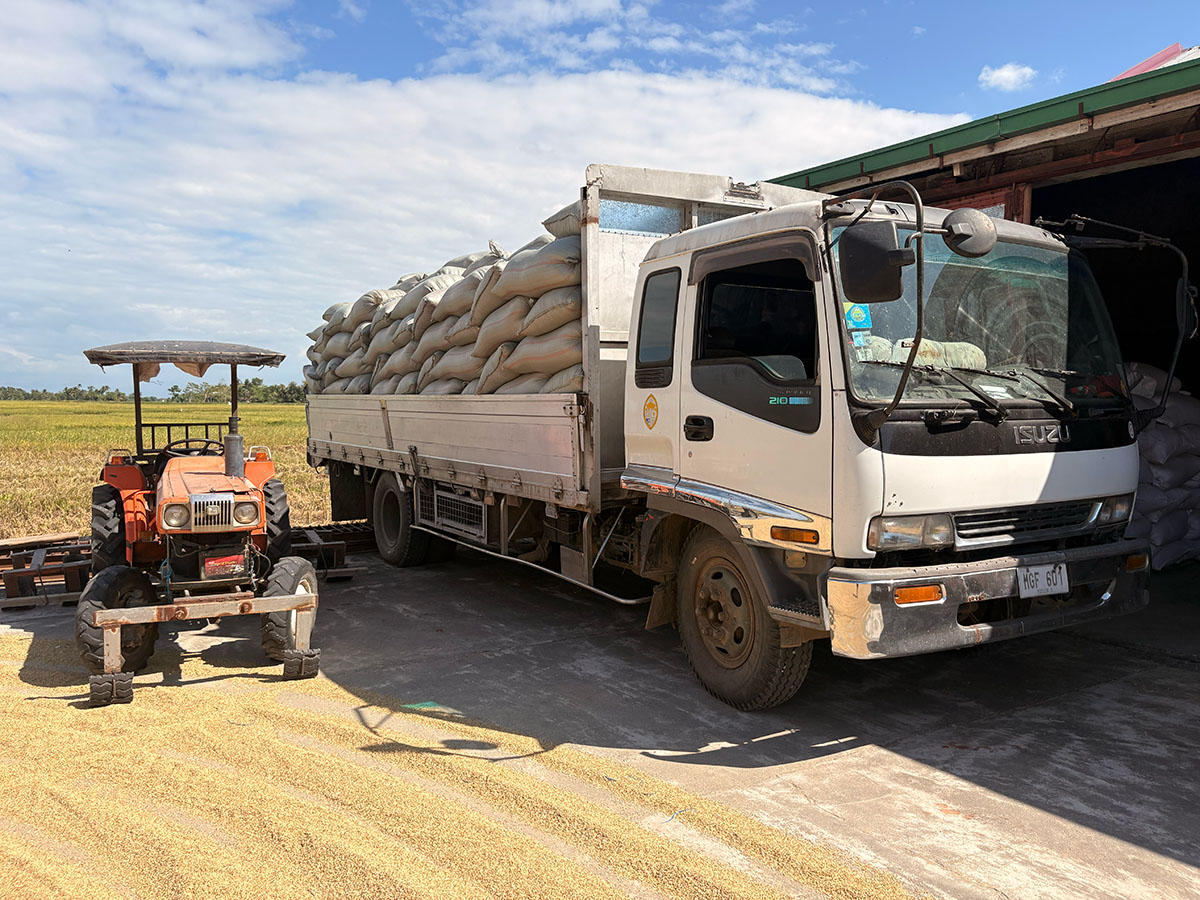
On the surface, it is just a concrete slab. We walked across it almost without noticing, far more drawn to the large buildings and the trucks loaded with bags of palay (unhulled rice) ready for milling and market.
But as I stood on it, warm underfoot, covered in palay drying in the sun, I was quite literally standing on a piece of history, a living testimony to over 30 years of partnership for ABM and the Episcopal Church in the Philippines. It is also a powerful illustration of what strength‑based mission and partnership can achieve over time.
This concrete slab belongs to the Holy Spirit Mission Multipurpose Cooperative, based at Holy Trinity Parish in the Episcopal Diocese of Santiago. ABM funded the slab around twenty years ago, along with a small storage shed nearby. At the time, the project was modest but practical: a response to an identified need, supporting local farmers to dry their palay more effectively before milling and sale.
What no one fully predicted then was just how large an impact that small, concrete beginning would have.
Starting With Strengths, Not Deficits
The significance of this project lies not in the slab itself, but in the approach ABM and ECP took. Rather than treating the community as passive recipients of aid, ABM and ECP partnered with local farmers who already possessed deep agricultural knowledge, strong communal ties, and a shared desire to improve their livelihoods.
The funding did not replace local capacity, it amplified it.
drying conditions and safer storage, farmers could produce higher‑quality palay. This led to better and more consistent prices at market. Income increased. Confidence grew. Most importantly, the cooperative began to see itself not as dependent on external help, but as capable of shaping its own future.
Momentum That Builds From Within
What followed was not a new funding proposal—but community action.
The farmers themselves extended the drying area, volunteering their own labour so that every peso went further. Increased and more reliable income allowed them to build another, larger storage shed. Later, the cooperative purchased shared harvesting equipment, further reducing labour costs and increasing efficiency of Coop members.
When the wet season posed new challenges, they responded from within. Using their own capital, they invested in an electric dryer, ensuring year-round resilience They installed the new dryer in the original ABM-funded shed: making the most of what they already had.
Each development built organically on the last. Each decision was locally led, locally owned, and rooted in the real conditions of people’s lives.
Partnership Measured in Decades, Not Projects
Too often, development is evaluated in short timeframes: outputs delivered, budgets acquitted, photos taken. But standing there, two decades later, tells a much deeper story.
What ABM helped to fund twenty years ago did more than improve rice processing, it set in motion a process of transformation. One concrete slab became the foundation for improved livelihoods, shared assets, strengthened cooperation, and long‑term economic stability. Within a generation, families had lifted themselves out of poverty.
This is the hallmark of sustainable development: when external support sparks internal momentum, and when partnership creates space for communities to grow in their own way, at their own pace.
Mission That Respects Dignity and Agency
At its heart, this story reflects missional theology grounded in dignity, agency, and mutuality. It echoes a strength‑based approach that asks not, “What is missing here?” but “What is already present—and how can it flourish?”
The Holy Spirit Mission Multipurpose Cooperative did not need rescuing. It needed companionship, trust, and just enough support to unlock what was already possible. The rest was achieved through shared effort, local leadership, and a deep commitment to the common good.
A Living Testament to a Strong Future
As I crossed the slab with my fellow pilgrims, surrounded by the growing rice paddies, I was reminded that mission is rarely flashy, but it is enduring. It creates a foundation from which future growth is possible.
The Provincial government had recently recognised their exceptional achievements by granting them a new rice mill. Fr Ralph, the Cooperative CEO and local parish priest, explained how it will serve both Cooperative members and other local farmers. Lower production costs and higher market prices for their produce means even greater financial stability for more people. Yet another win for this community.
Fr Ralph concluded that that ABM remains a part of their story, just as that concrete slab and shed continue to serve the community to this day.
Concrete may crack and buildings may age, but investments in people, relationships, and local capacity continue to bear fruit long after the paperwork is filed away.
This is what sustainable development looks like. This is what strength‑based mission makes possible. And I am profoundly grateful, and proud, to be part of this living history.
ABM and Anglicans in Development acknowledge the support of the Australian Government through the Australian NGO Cooperation Program (ANCP), whose support has been essential in enabling community‑based development work with the ECP and the ECARE Foundation, including the ones mentioned in this article.

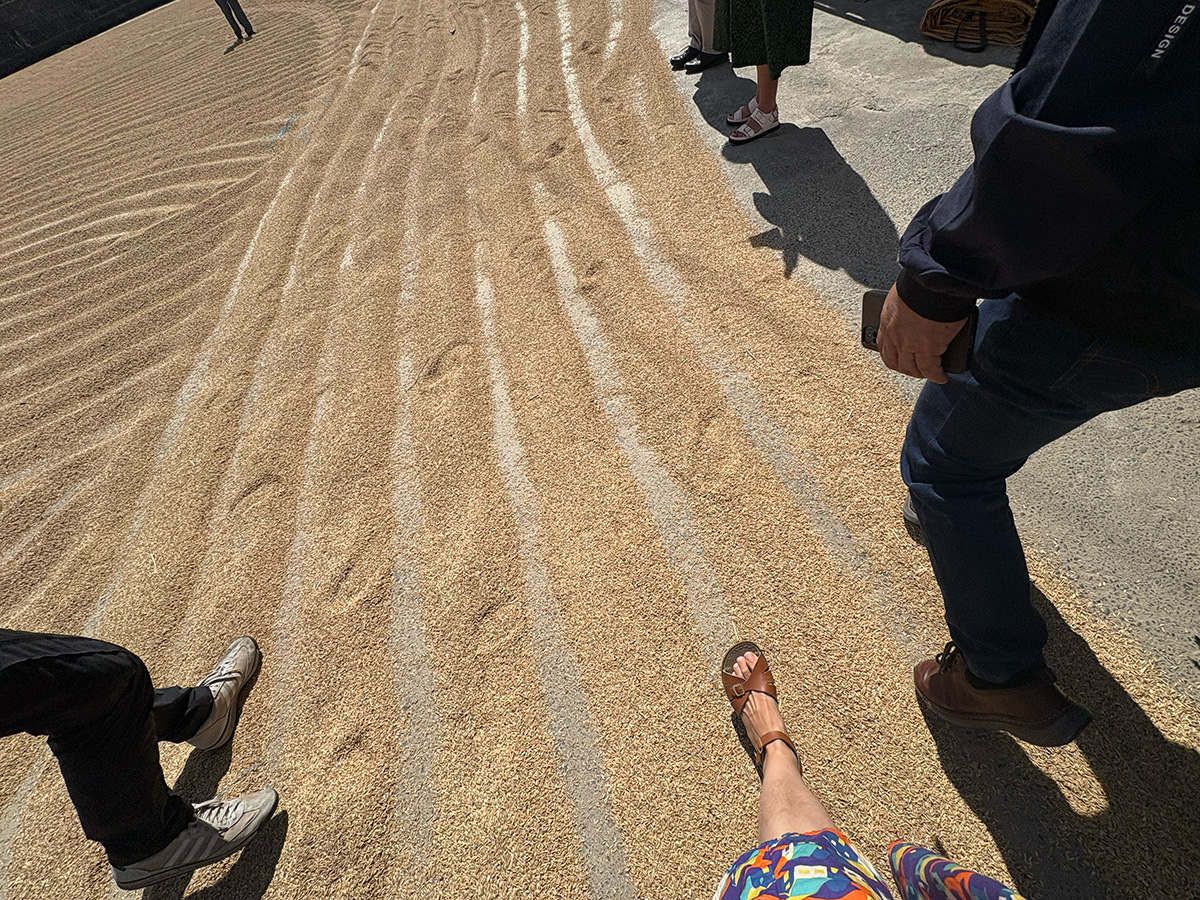
ABM’s Meagan Schwarz and pilgrims with Fr Ralph walking across the concrete slab ABM funded in early 2000s – a piece of history and a foundation for a flourishing community © ABM
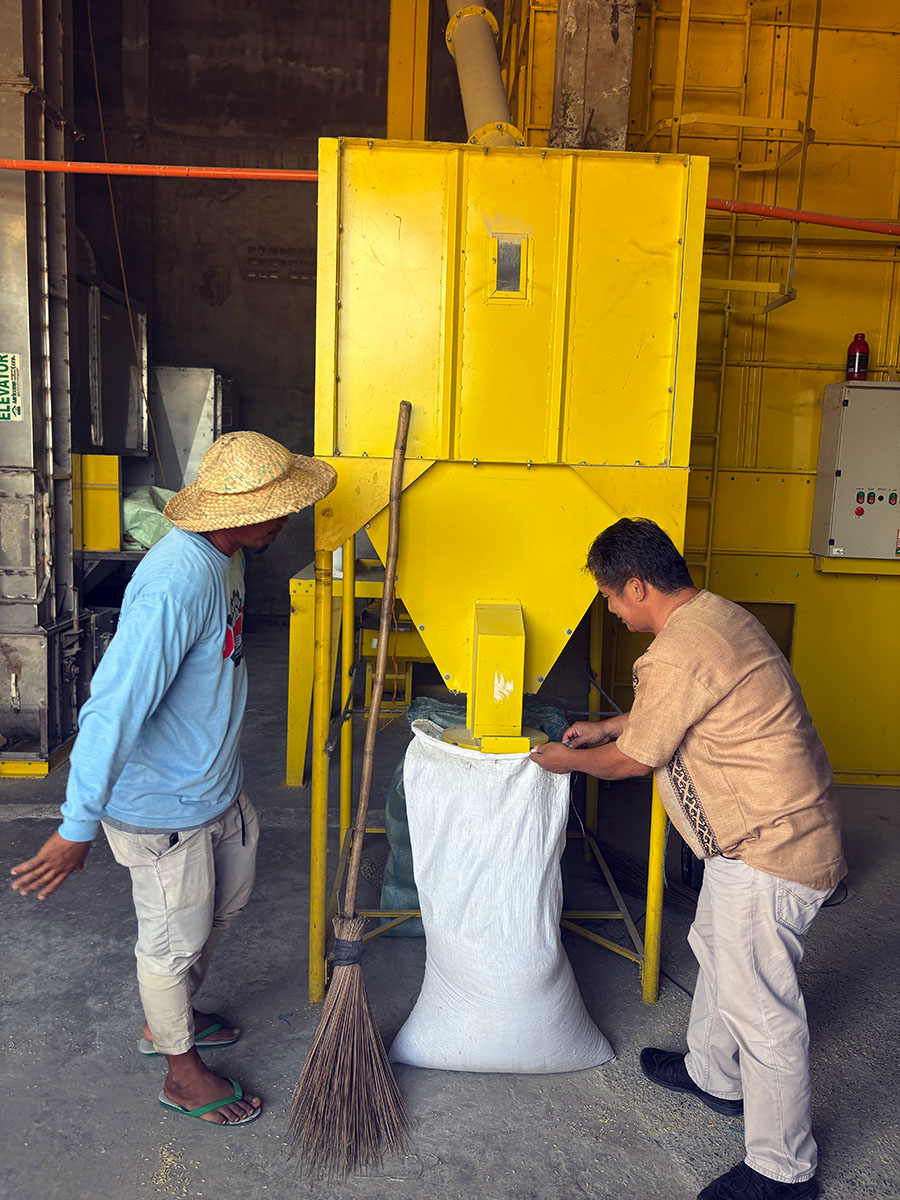
Fr Ralph (R) showing the Coop owned electric palay dryer at work, filling a bag ready for milling and market. Even in the wet season, palay can be prepared for milling and market, ensuring reliable income throughout the year © ABM