Luz extends her purchasing power
Barangay Hilantagaan is one of the coastal communities in the municipality of Santa Fe, Bantayan Island, Philippines. IFI-VIMROD, one of AID’s local partners in the country, has been working with the poor fisherfolks on the island since 2023 through the Assets-Based Community Development (ABCD) project.
Among the community-based people’s organisation supported is the Hilantaggan Vendors’ Association (HIVA). Capacity-building activities and small projects were provided to HIVA to enhance the organization’s project management.
Luz Paciño, treasurer of HIVA in Barangay Hilantagaan describes how her acceptance of the project and her convictions about the lessons it taught her improved her financial potential.
“My family and I relied solely on fishing for our livelihood prior to the ABCD project. Life was an everyday struggle. During weather disturbances, we get nothing from the sea.” Luz says.
“I did not finish elementary education, but I find it fascinating to hear about the IFI-VIMROD program. During the time when the staff introduced the project, there were English words like Asset-Based Community Development (ABCD). When it was translated and explained in our own dialect, I learned that it was about maximizing internal gifts of a person or community for development.”
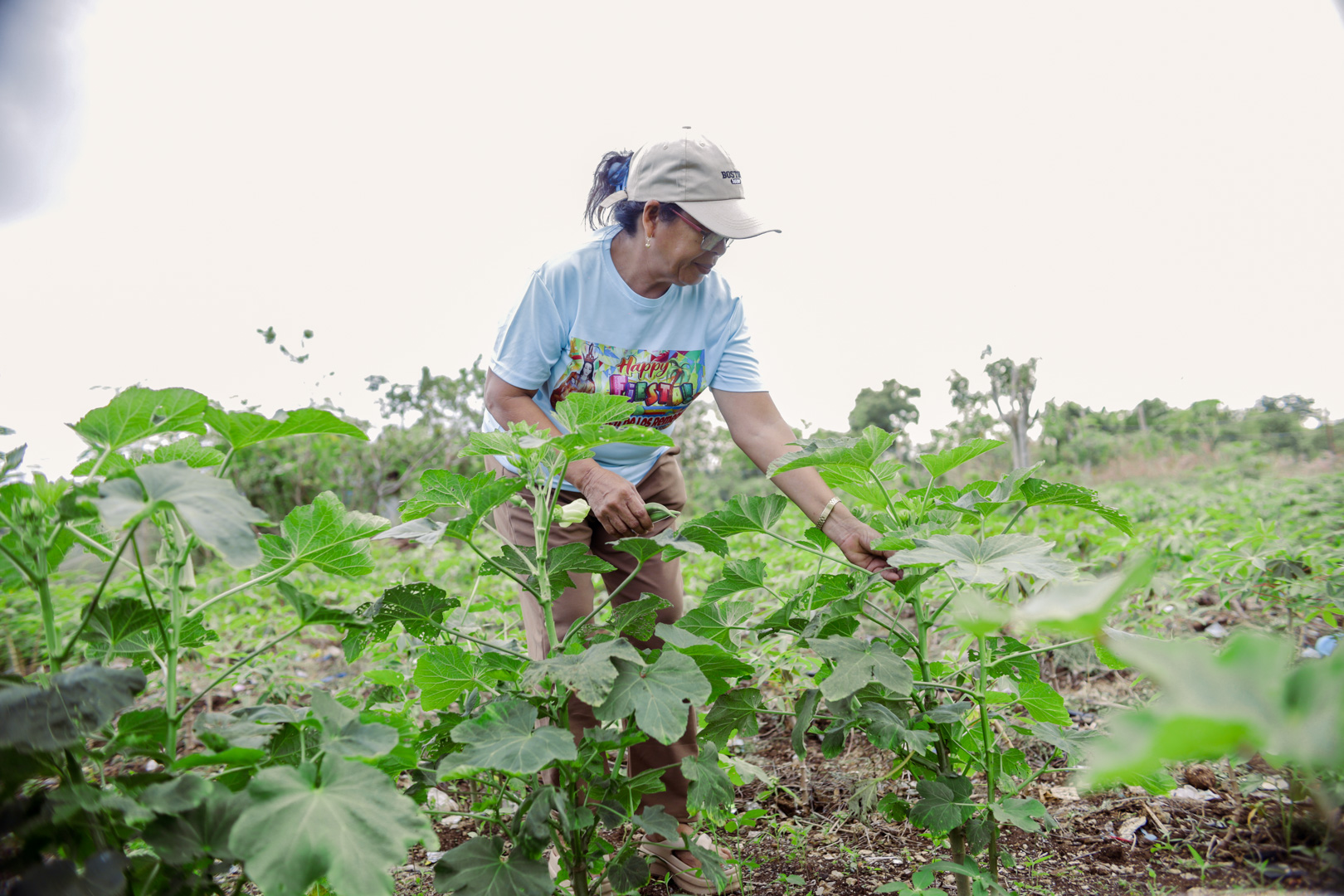
“The ABCD initiative completely changed my perspective on agriculture. I had no interest in growing crops before. IFI-VIMROD taught me that fermented fish can be used to fertilize plants. Since the island has a lot of sardines, I tried creating fish amino acid (FAA) and using it on my plants. I can now sell eggplant, chili, and other crops every day because the FAA was so successful in increasing yield.”
When Luz attended the odourless pigpen farming and livestock-raising seminar offered by the ABCD project, she said she immediately put the technology to use.
“I fed the pigs provided by my organization (HIVA) with fermented juices and organic materials available in our community. I also used indigenous microorganisms (IMOs), which are beneficial bacteria, fungus, and yeasts that are sourced locally, as treatment for one of the pigs when it became ill. I also observed that using Fish-Amino Acid (FAA) enhanced sow lactation. After four months, from September 2025-November 2025, I was able to receive a net profit of P13,375.00 (AS$ 334.00). I also was able to save an estimated amount of P10,000.00 in commercial feeds because I only used available materials in our community.”
“I created an odorless pigpen using the Korean Method. I utilized the saw dust as the pig pen’s bedding. When the saw dust breaks down with pig wastes, it makes an excellent fertilizer. For me to be able to apply it on my crops, my husband helped me by hauling the fertilizer to my farm. We were very happy that we got a lot of harvest.” What Luz is doing is known as using a Low-External-Input Sustainable Agriculture approach.
According to Luz, when she started to cultivate a small parcel of her lot using sustainable agriculture technology, she was able to gain P14,700.00 (AS$ 367.00) from July 2025 to December 2025. “I expanded my farm by using the income as a down payment for a piece of land.”
For Luz, the benefits she received from the ABCD project have strengthened her financial capacity and purchasing ability. The additional income from the livestock-raising and crop production enabled her to cover essential expenses such as household bills and health care.
“I am thankful to AID for supporting IFI-VIMROD. I pray that this initiative will continue so that more poor communities will be empowered,” Luz says
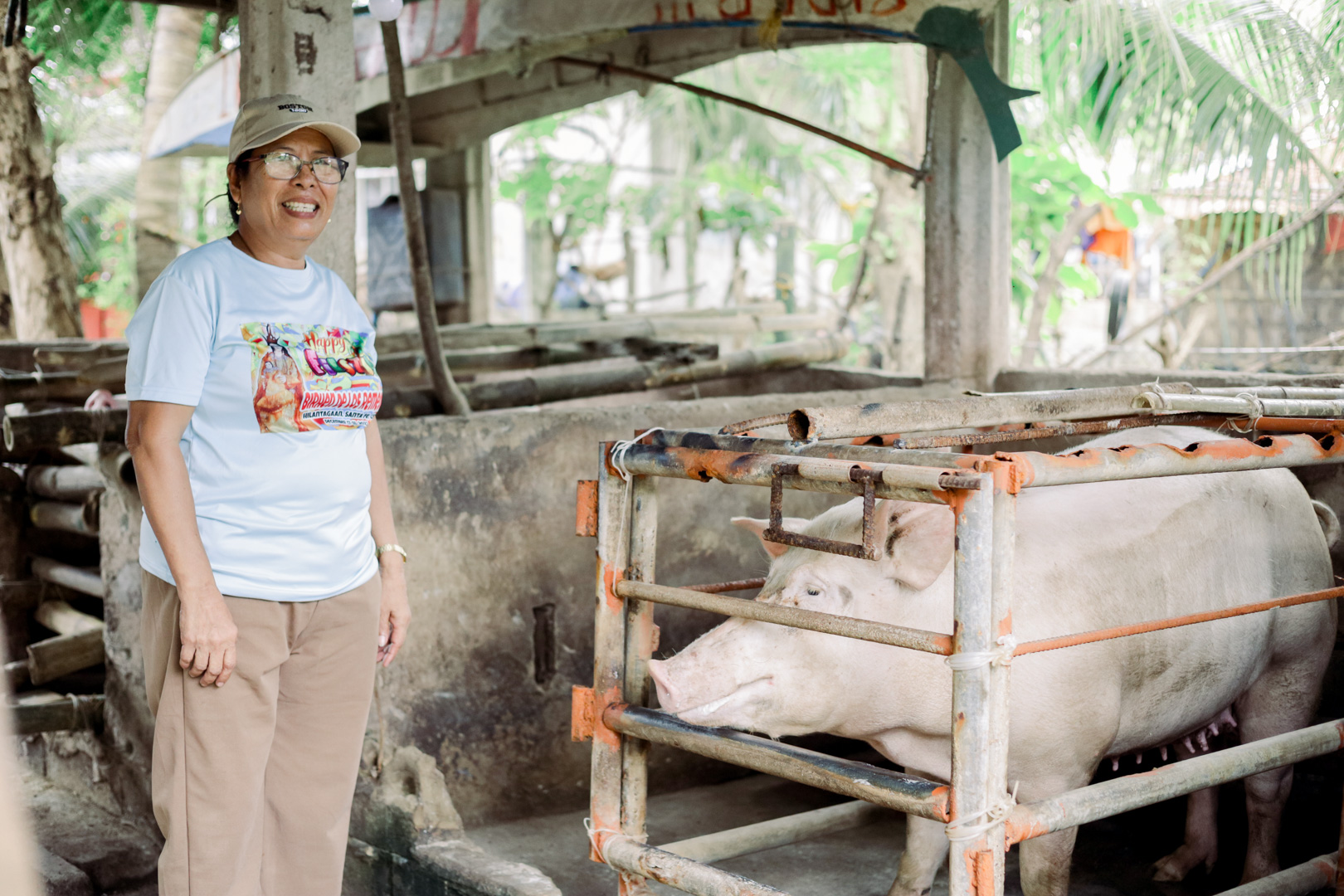
Using the low-exernal-input method of sustainable agriculture, Luz saved on commercial pigfeed © IFI-VIMROD. Used with permission.