A Pilgrimage That Changes Perspective
Reflections from the Philippines
Earlier this year, the Anglican Board of Mission (ABM) hosted a pilgrimage to the Philippines – an experience that proved both eye-opening and deeply encouraging. What we encountered was not simply a series of projects or programs, but a living example of faith expressed through community transformation, practical action, and quiet confidence.
The journey took us from Sydney to Manila, followed by a domestic flight north and a drive into the province of Isabela. Our destination was Santiago City, a modest rural centre of around 150,000 people, surrounded by rice fields and shaped by agricultural life.
At first glance, it did not seem remarkable. But over the following days, it became clear that something quite extraordinary is happening there.
Where Faith and Livelihood Meet
Our first visit was to a rice growers’ co-operative supported by the local Anglican parish, the Holy Spirit Church—one of 15 parishes in the Anglican Diocese of Santiago. (There are 50 congregations/worship centres, but only 15 are fully fledged parishes.)
The co-operative has been operating for around 20 years. It is led by a priest, and most of its members are part of the church community. What it has achieved over that time is nothing short of transformative.
Members spoke of a past marked by subsistence living – basic housing, uncertain income, and limited opportunity for their children. Today, their circumstances are very different. Families now live in proper homes with water, sanitation, and electricity. All children attend school. Farming practices have improved through ongoing training, and the co-operative owns its own harvesting equipment.
Crop yields have increased significantly, and the co-operative is financially strong. It provides members with medical benefits and life insurance, distributes annual dividends, and contributes financially to the life of the church. It is now preparing to install its own rice mill, funded entirely from its reserves, which will further strengthen both income and sustainability.
This is not an isolated success story. It is one of many such co-operatives supported by the Episcopal Church in the Philippines (ECP), each reflecting the same underlying principle: that faith, when lived out in practical ways, can reshape both communities and futures.
A School Full of Hope
The following day, we visited St Mark’s School), located about 45 minutes from Santiago, set among rice fields.
What started as a Sunday School, then grew into a Nursery School and Kindergarten to meet the demands of the local community. Since 2022, St Mark’s has expanded, adding on a new grade each year, with the intention to graduate their first Year 6 students in March 2028. This growth required new buildings.
As representatives from ABM, we participated in the ribbon-cutting ceremony of the newest two-story building, containing 4 classrooms and office spaces, followed by a comprehensive blessing led by the local Bishop. This was not a brief formality, but a thoughtful and deliberate blessing of every classroom, every student, every teacher, and the wider community. The service concluded with the celebration of Mass in English.
The school itself stands as a tangible expression of partnership. The new building has been funded by ABM donors, and while some classrooms are still awaiting desks and library books, the sense of anticipation and energy is unmistakable.
The students are enthusiastic, engaged, and clearly delighted to be there. Their parents are proud – deeply aware of the opportunities that education can provide. The school plans to increase enrolment, with the expectation that the school will double in size (including another new building) within the next few years, supported by further ABM donor commitment.
Like the co-operative, the school is closely connected to the life of the Church. The Principal and teachers are active members, and the school forms part of a broader commitment by the ECP to education across the country.
A Holistic Approach to Mission
One of the most striking aspects of the Episcopal Church in the Philippines is its holistic approach to mission.
Alongside parish life, the Church is actively engaged in education, healthcare, and community development. It operates schools throughout the country, as well as Trinity University of Asia in Manila. It is also associated with St Luke’s Medical Centre, one of the leading hospitals in the country, the Episcopal Community Action for Renewal and Empowerment (E-CARE) Foundation and St Andrew’s Theological Seminary.
This breadth of activity reflects a clear conviction: that the work of the Church is not confined to worship alone, but extends into every aspect of life – spiritual, physical, educational, and economic.
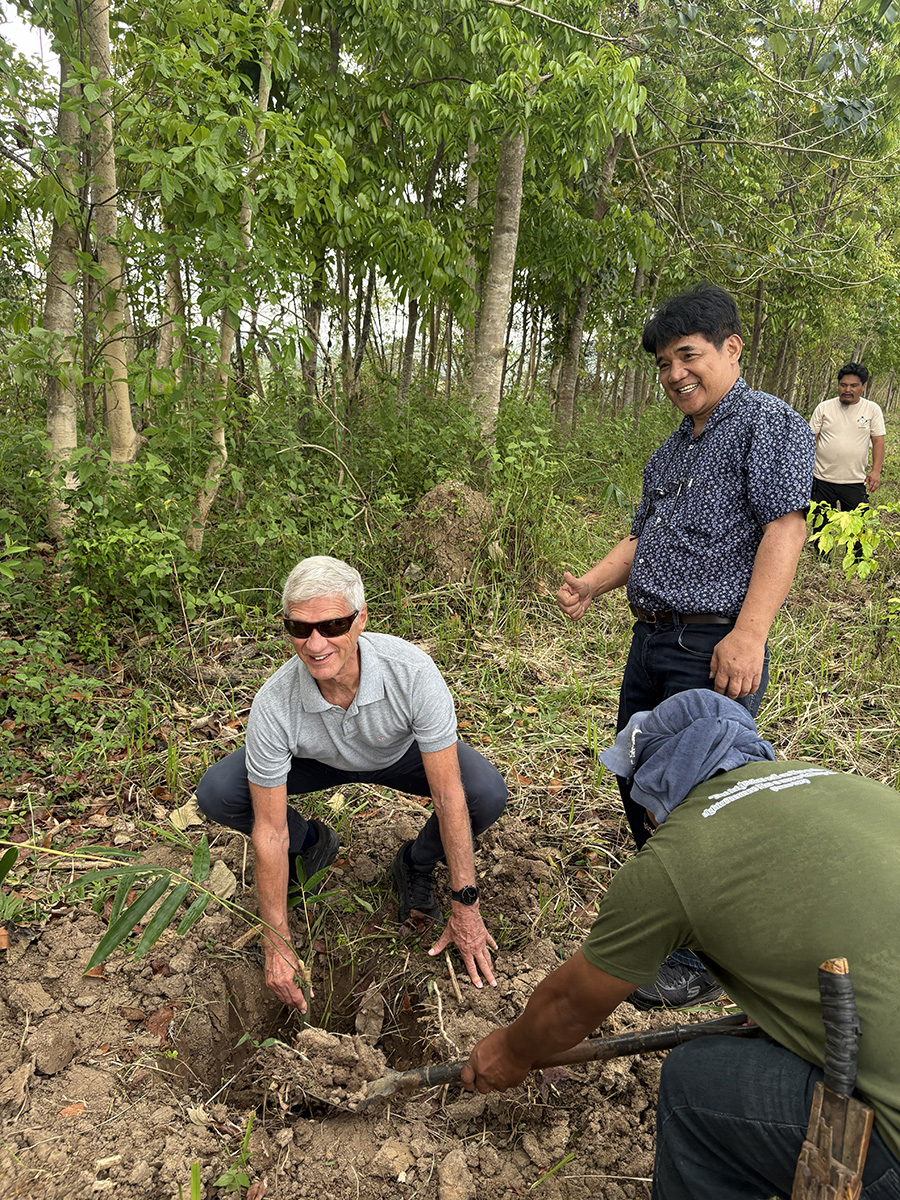
This was evident again in our visit to an experimental agricultural facility in the neighbouring Mountain Province. Here, the focus is on restoring soil health after years of overuse of chemical fertilisers, and on developing more sustainable, largely organic farming practices.
The project operates in partnership with local government and the local university and is staffed largely by graduates in agricultural science. Like the co-operative, it is owned by local farmers and supported by the Church. Even at leadership level, the commitment is clear: the local Bishop is directly involved and, during our visit, chose to attend co-operative training sessions rather than a national meeting of bishops.
A Distinctive and Growing Church
The Philippines is predominantly Roman Catholic, with around 79% of the population identifying as such – a legacy of more than 300 years of Spanish influence.
Within this context, the Episcopal Church in the Philippines is relatively small, but it is growing – and growing with purpose.
From its beginnings in the early 20th century, the Church made a deliberate decision not to focus on converting those already within established Christian traditions, but instead to serve communities and regions not yet reached. That approach continues today.
Its growth is not driven by argument or persuasion, but by example.
People see the difference that the Church is making in communities. They see clergy – particularly women priests – actively engaged in everyday life: visiting homes, offering support, listening, and sharing in the challenges and hopes of families.
They see children gaining access to education, farmers improving their livelihoods, and communities becoming more stable and self-sufficient.
They notice. They ask questions. And many choose to become part of the Church.
As the Prime Bishop of the Philippines observed, what is happening at present is “almost overwhelming”.
Partnership, Not Dependency
A defining feature of the ECP’s work is its commitment to self-reliance.
Since becoming independent of the US Episcopal Church in 1990, it has worked deliberately to avoid the kind of dependency that has too often characterised development efforts elsewhere. Projects are designed not simply to provide assistance, but to build capacity, initiative, and long-term sustainability.
This approach shapes its relationships with partners such as ABM. These are not relationships of donor and recipient, but of equals – marked by mutual respect, shared faith, and a willingness to learn from one another.
Equally important is what the partnership is not. The ECP has never sought to become a version of the Church shaped by Western or Australian culture. Nor is that the intention of ABM. The Filipino Church is deeply rooted in its own history, culture, and identity, and rightly so.
What emerges instead is a partnership that values difference while recognising a shared purpose.
“Come and See”
On our final morning in Manila, we shared breakfast with the Chancellor of the ECP and his wife. What might have been a brief farewell became a three-hour conversation about faith, leadership, and the future.
At its heart was a simple but powerful idea: the call to discern where God is at work – and to join in.
That spirit seems to underpin everything we had seen. It was present in the co-operatives, in the school, in the agricultural projects, and in the life of the Church more broadly.
For those who are interested, ABM offers opportunities to experience this work firsthand. The invitation is simple: come and see.
But it is worth noting that an experience like this does more than inform – it changes perspective. It challenges assumptions, broadens understanding, and, in many cases, reshapes the way we think about faith, mission, and our place within it.
Rod Ravenscroft
ABM Volunteer and St James’, King Street, Parishioner.
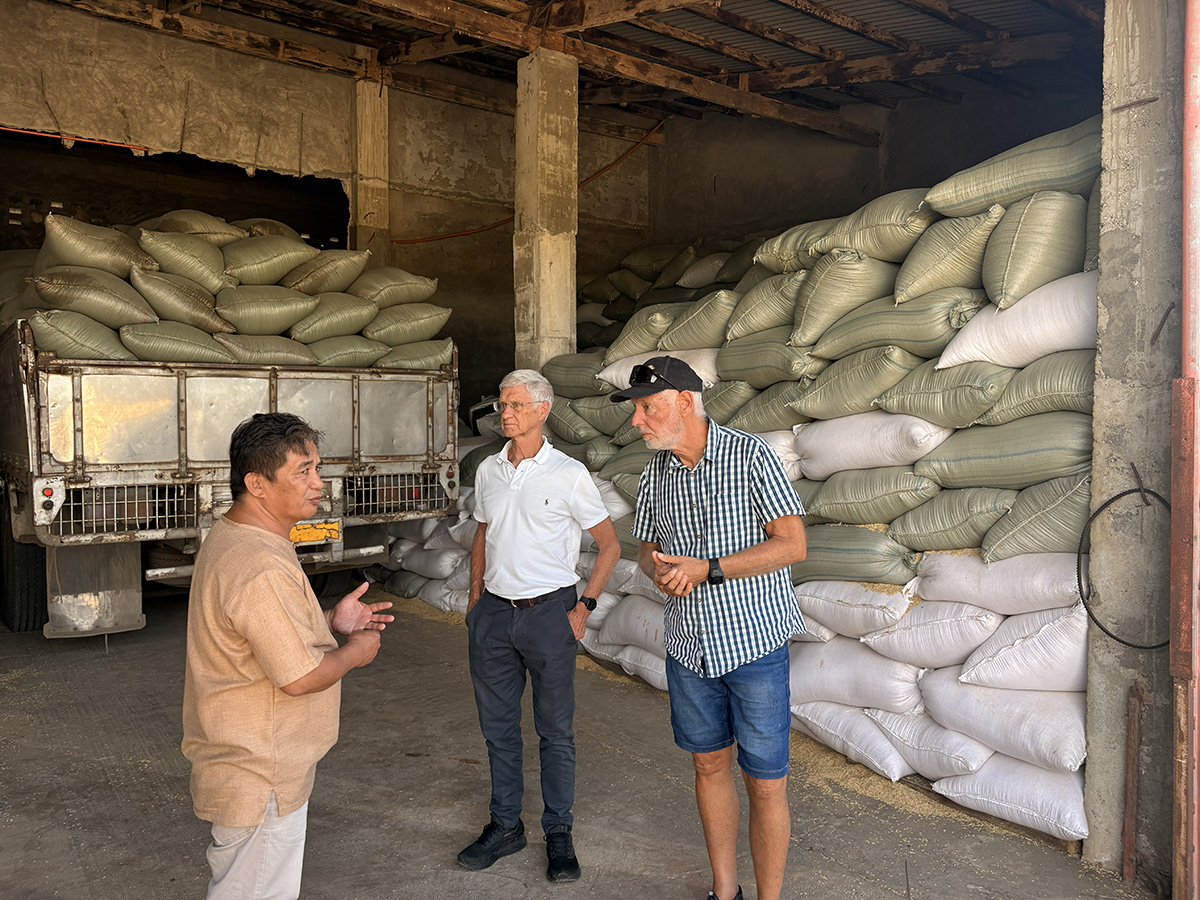
Rod and Brad Rulfs with Padi Ralph, priest and CEO of the Holy Spirit Mission Cooperative, inspecting bagged rice ready to be milled. © ABM
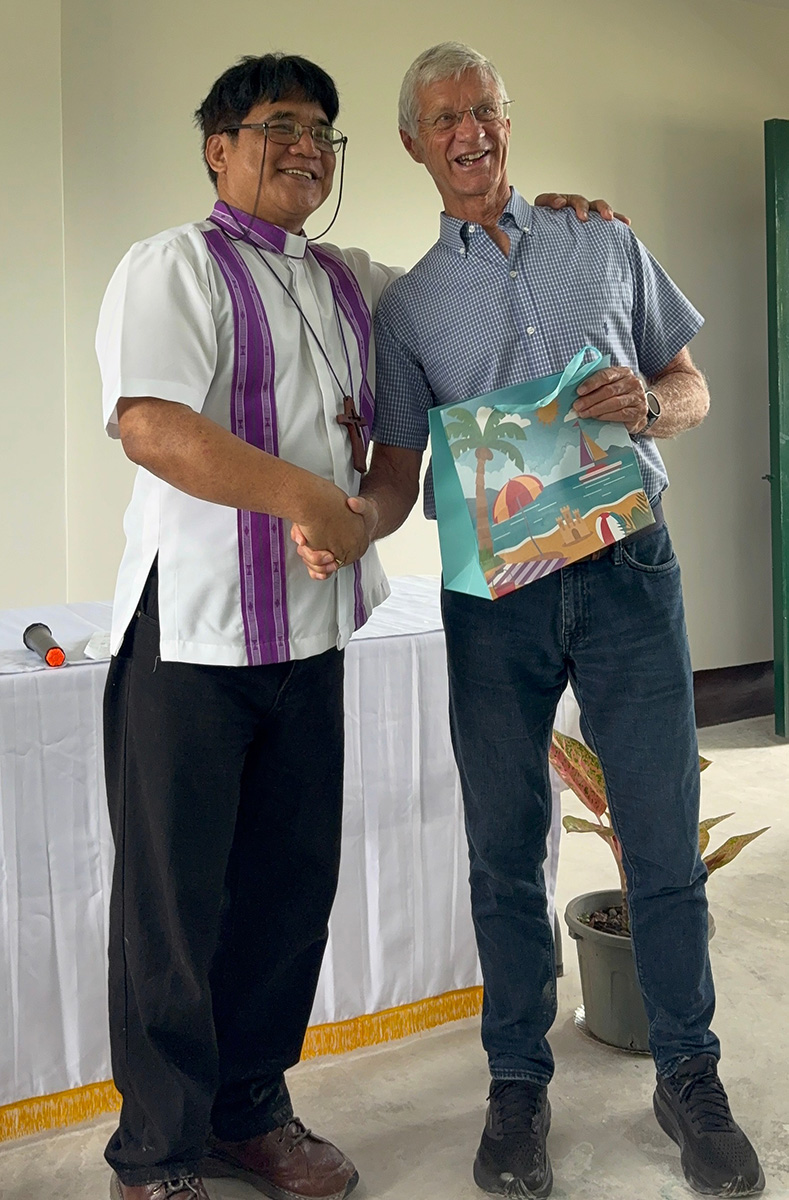
Rod is welcomed to the Philippines by the Rt Rev Frenzel Piluden (Episcopal Diocese of Santiago). © ABM