From “Come and Do” to “Come and See” – why ABM pilgrimages are changing for the better.
What is a pilgrimage? Why do we choose to go on a pilgrimage?
Books and articles may offer us a definition of pilgrimage, but the true meaning always lies within the heart of each pilgrim. There would be similarities – a journey of some sort, prayerful intention, a deliberate stepping aside from routine, finding the voice of God in the unfamiliar – but, even then, each pilgrim responds to the same pilgrimage in a different way.
“Come and See” is an invitation from ABM to you, to experience God’s mission at work in the lives of our Anglican partners. This reflects a practical change in how ABM engages in mission, from sending missionaries to do God’s work, to sending pilgrims to see how God is working through our partners.
In July 2026, 12 pilgrims joined me for 10 days in the Solomon Islands, visiting the Anglican Church of Melanesia (ACOM).
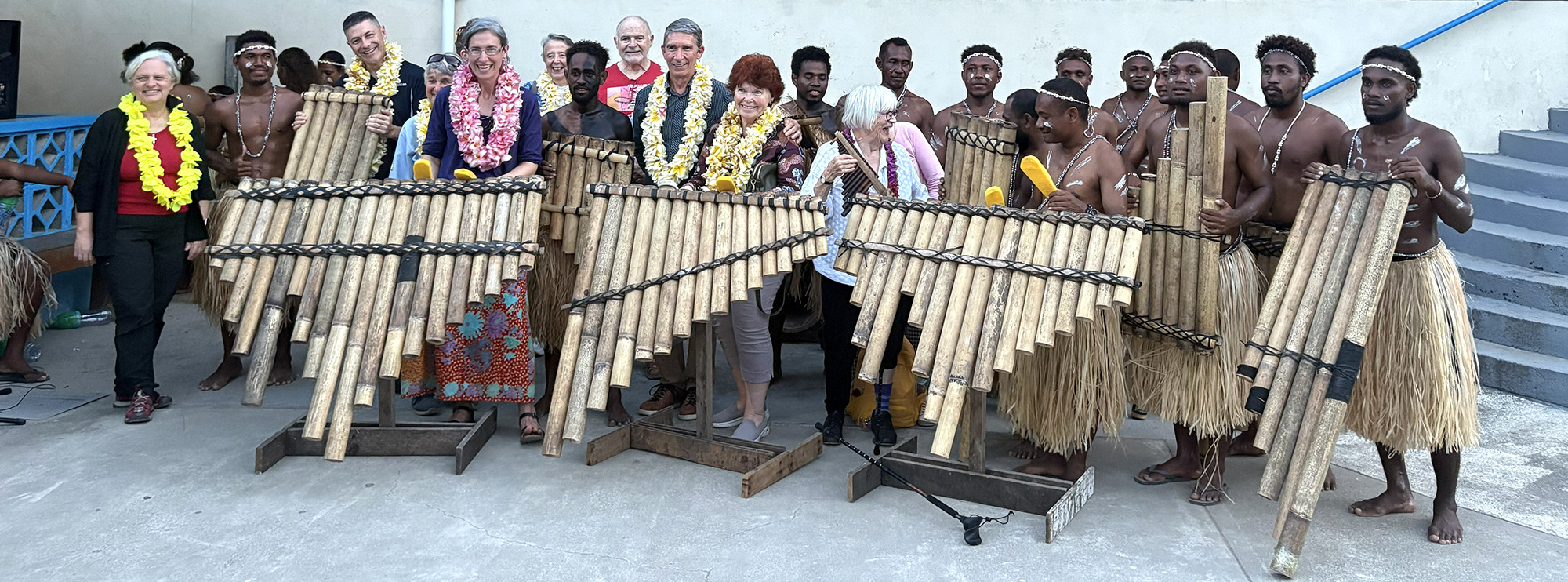
ABM pilgrims enjoyed the lively music of the Kolomosu Youth playing their bamboo instruments © ABM/Meagan Schwarz
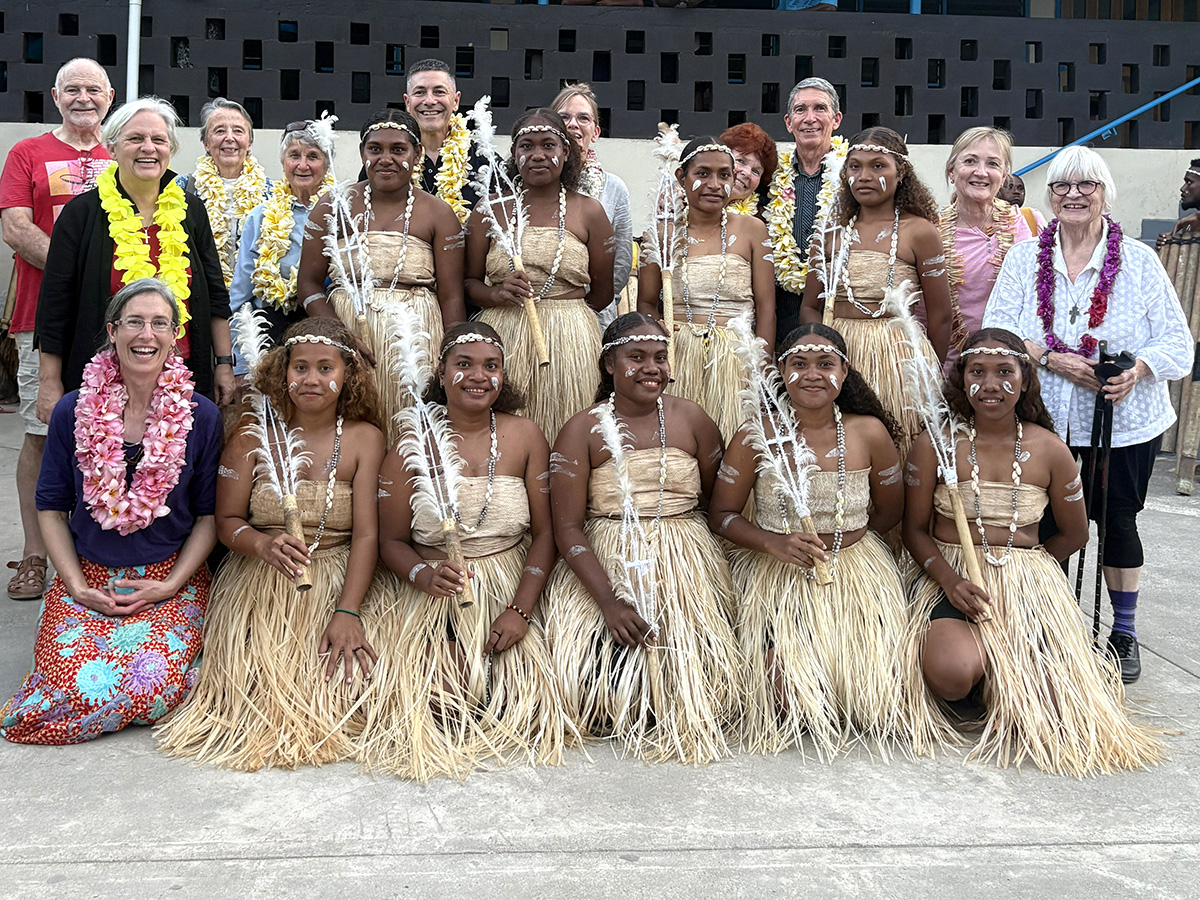
ABM pilgrims enjoyed the graceful traditional dancing of the Kolomosu Youth from Diocese of Ysabel © ABM/Meagan Schwarz
ABM’s partnership with ACOM goes back 175 years to the formation of ABM in the early years of the Melanesian Mission (which eventually grew into the now independent church we know as ACOM). Our partnership has evolved over that time, and the pilgrimage was a celebration of all that has been achieved and recognition that the Australian church can learn from our sister church in Melanesia.
The pilgrims saw the undeniable physical and material poverty present in the Solomon Islands, but they also saw the great strength, joy, hope and resources present in the church.
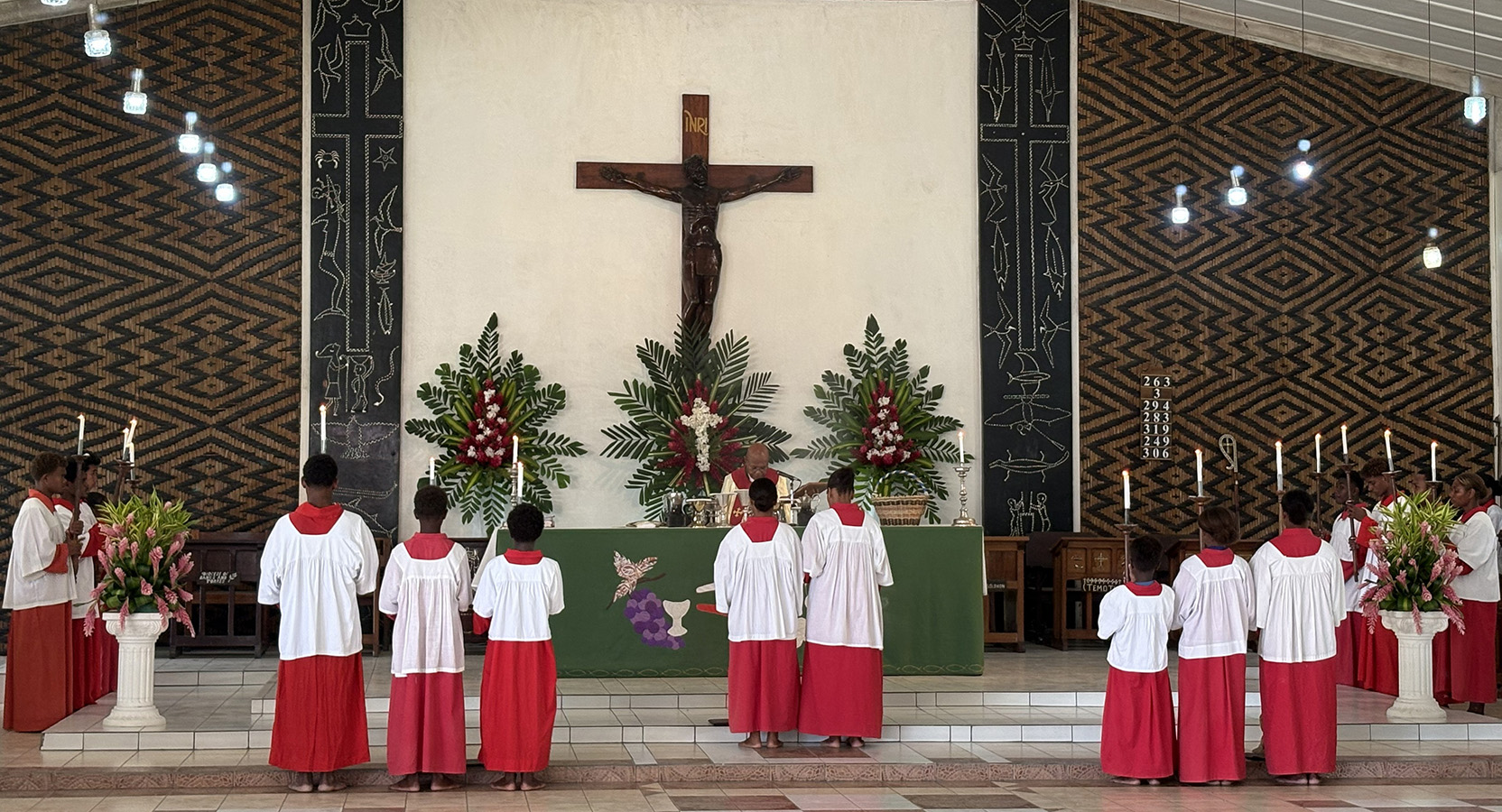
Pilgrims worshipped at St Barnabas Provincial Cathedral © ABM/Meagan Schwarz
They saw a strong and vibrant church that is responding in practical ways to local needs. They saw how the support of ABM AID is facilitating new programs that bring love, hope and justice.
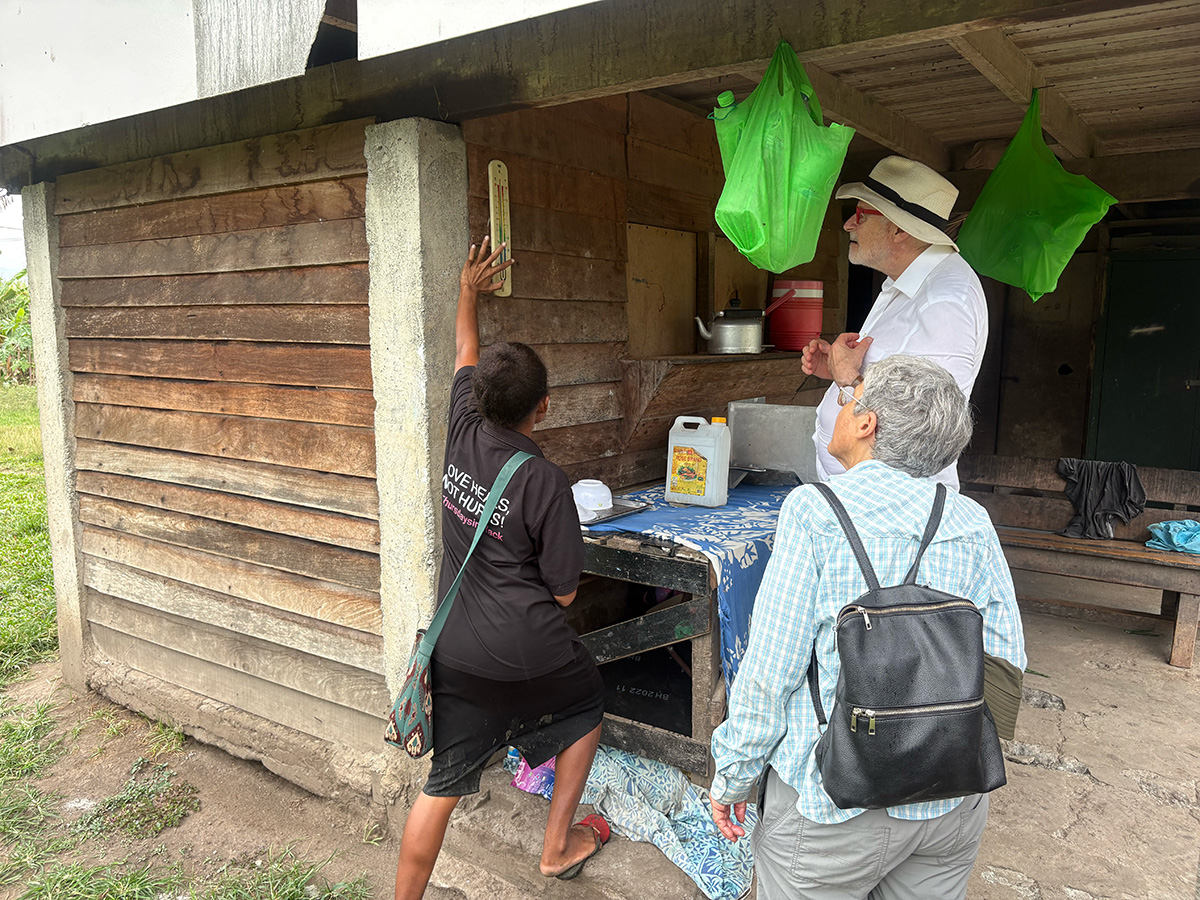
ACOM’s Freda explaining how collecting climate data (temperature, rainfall and shoreline measurements) is helping communities prepare for and respond to changes in the climate. © ABM/Meagan Schwarz
Flying into Honiara, I felt like I was back in PNG, where I’d lived and worked with ABM and the Anglican Church of PNG for 7 ½ years. The warm and musical welcomes and generous hospitality only reinforced that feeling. Although one aspect of those welcomes was a culture shock for some pilgrims: both PNG and the Solomons Islands think that a warm welcome includes being challenged by a dancing figure wearing a mask and waving a hatchet!

Pilgrims received a traditional warrior welcome on arrival at All Saints Parish, Honiara © ABM/Meagan Schwarz
After their initial shock, the pilgrims were moved by the singing – from rousing hymns and choruses that made our hearts soar, to the quiet delicate Agnus Dei and Taize sung during communion –nourished physically by the plentiful food and encouraged spiritually by the worship and conversations with our hosts.
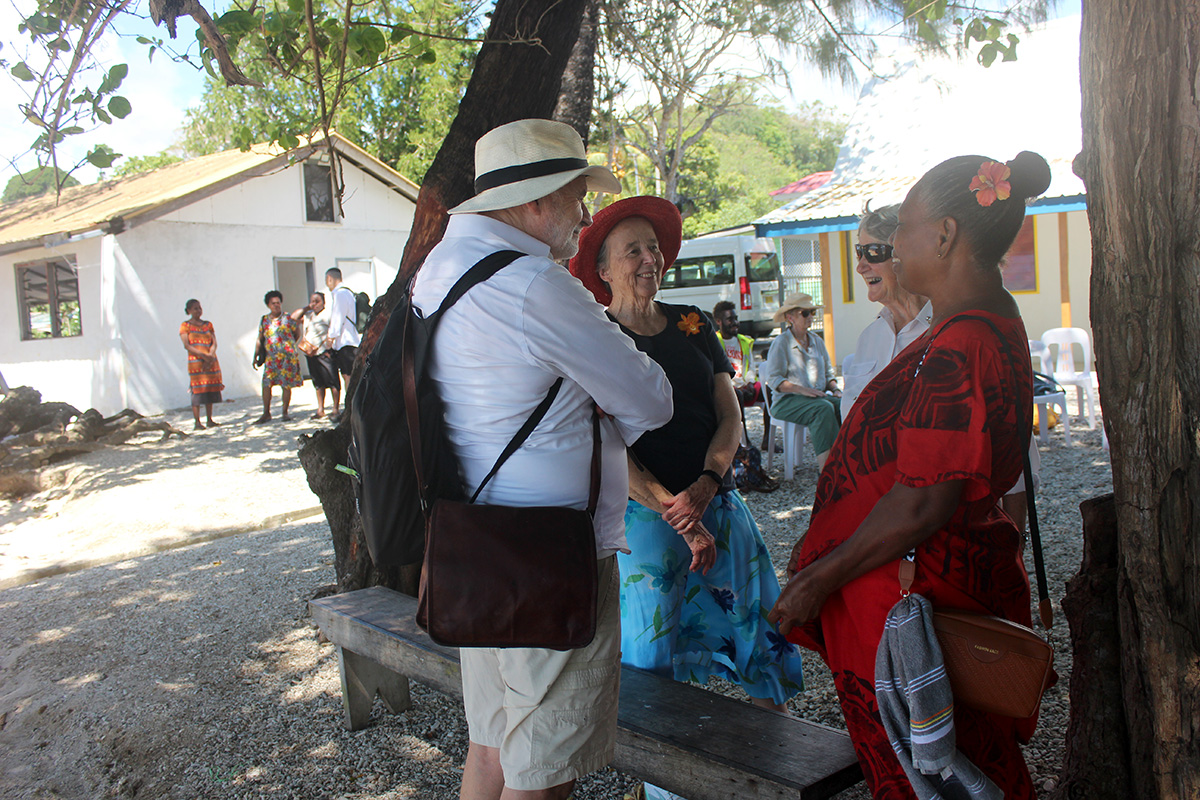
Pilgrims enjoyed spending time with parishioners at St Alban’s Parish, Honiara © Adara Raistrick used with permission
Meeting people matters!
While hearing about a partner church from others and seeing pictures is valuable (and for some, the only way available to them), it is true that there is nothing quite like visiting and seeing for oneself what God is doing.
For me, meeting ACOM staff felt like greeting old friends. I knew their names from reading about the work we support over many years. For the pilgrims, they met strangers on day 1 and farewelled friends on day 10. Once we got past the obvious differences, pilgrims found our hosts shared similar hopes and concerns for their children, country and church. But they also found in our hosts the same joy Paul expressed in his letters – joy amidst the troubles.
Visiting St Nicholas Demonstration Farm, a place I have read and spoken about for many years, was a particular highlight for me. I was keen to see the enormous watermelon patch I’d seen in photos. The student who kindly took me there was surprised at my delight in having my picture taken in the watermelon patch – but she graciously found a good-sized watermelon for me to hold!
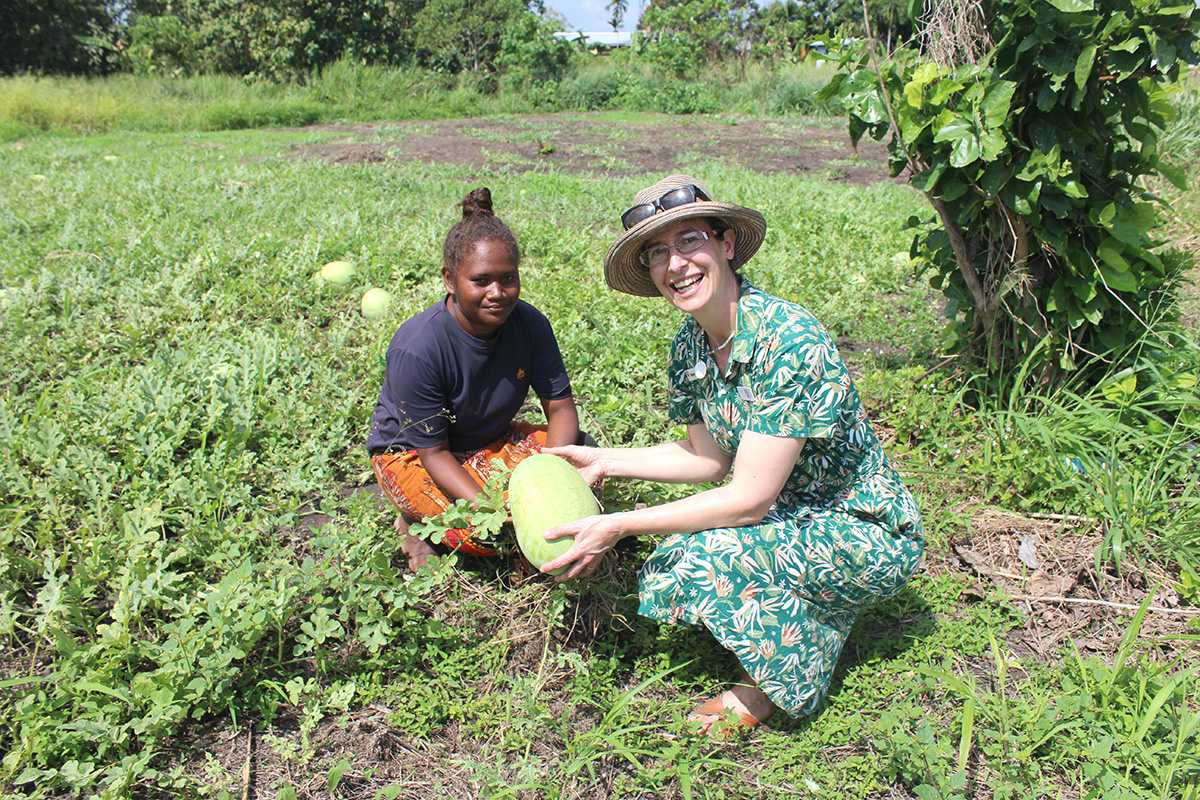
Meagan Schwarz was excited to see the St Nicholas’ farms’ watermelon patch she’s heard about for many years © Adara Raistrick used with permission
And then she shared her delight in working at the demonstration farm as the practical assessment of her agriculture course. She spoke passionately about taking her knowledge into the villages and teaching families to use fewer chemicals on their food gardens, improve their nutrition and harvest yield, and then be able to sell excess food at market. She is one of many students being trained by St Nicholas Demonstration farm.
Transformation
The pilgrims came and saw and were changed. One pilgrim admits that seeing for herself the devastating impact of rising sea levels on shorelines and changing rainfall patterns on the livelihoods of the people she met has challenged her views on climate change.
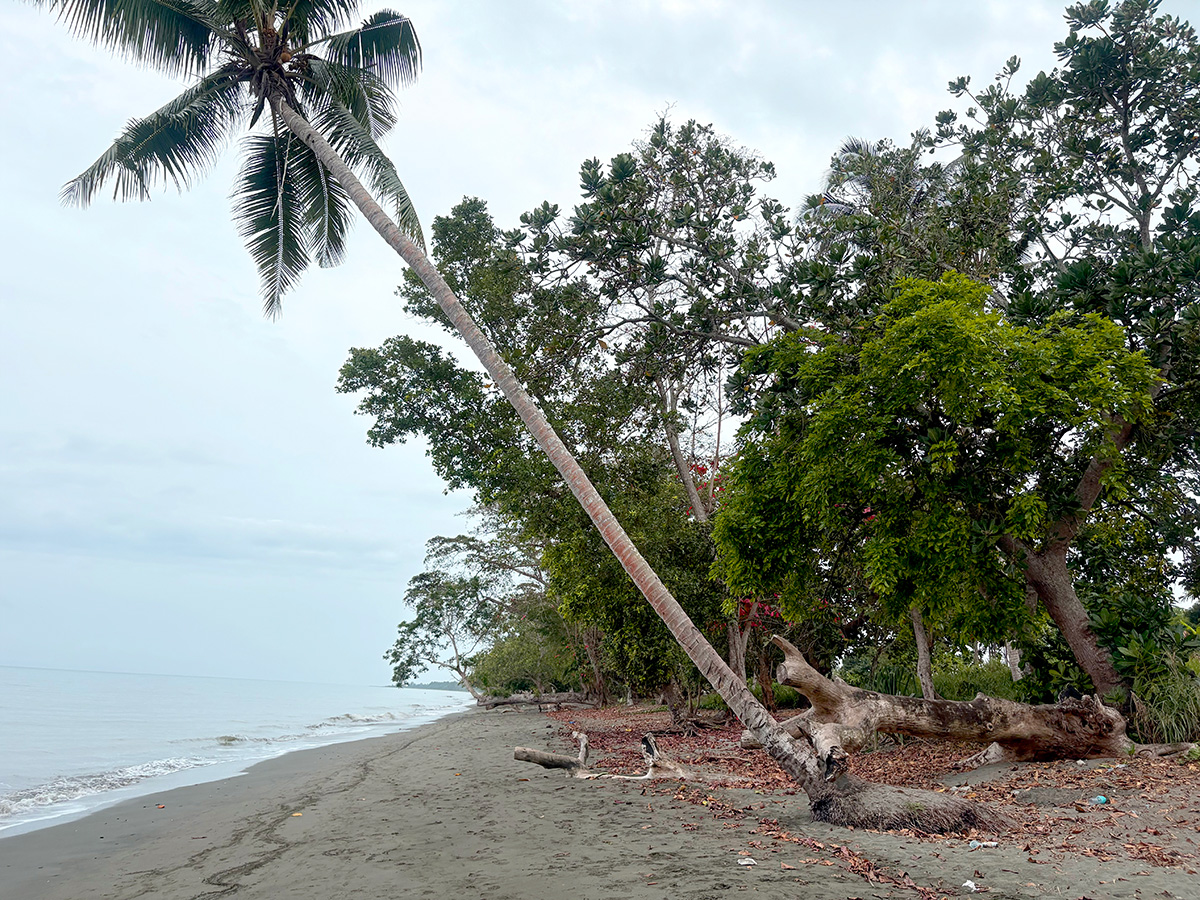
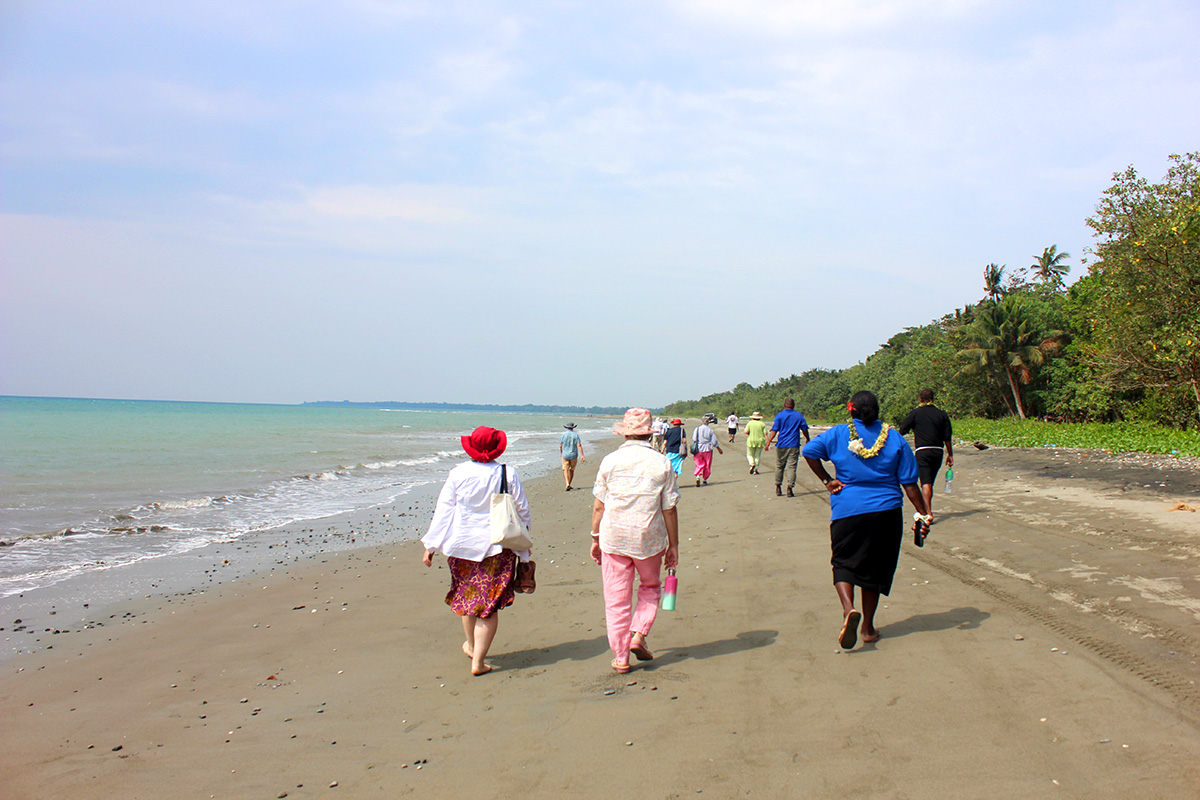
Shoreline at Red Beach near Honiara where measurements are taken to track erosion and sea levels. © ABM/Meagan
Another was challenged to stop taking for granted the conveniences offered to us in Australia and to live more simply, having witnessed the joy of our hosts who had comparatively less.
Here are a smattering of the comments made by returning pilgrims:
“I feel more at peace with myself and God more capable of endurance and resilience.”
“It reinforced the joy of worshipping in community. Sometimes we need to be refreshed in community rather than feeling it is all about effort with little return. It brought some real renewal for the love of church in all its many forms.”
“I have strived to be a positive person, generally. But meeting the Melanesian people really ignited my heart, to spread not just the Gospel message, but the joy therein. I’ve said multiple times a day since coming home the passage from Nehemiah 8:10 “The joy of the Lord is my strength.” God has been renewing my joy constantly, and I’m able to give that joy to others the same way the Solomon Islanders gave to me.”
“I am challenged to rediscover a sense of joy in worship”
“God was calling me to be present in the unfamiliar and to trust. God was exposing me to examples of following God and loving others”
“I hope that it has taught me to be more humble and appreciate the differences in people that we meet or know in our daily lives.”
“I am praising God more for his awesomeness and power in my life, realizing that I don’t need to have all the gadgets and gizmos, I need a quieter and simpler faith and lifestyle.”
This is why the ABM pilgrimage program is integral to ABM’s vision for mission: helping Australian Anglicans understand the ways in which God is working through them and our partners to achieve the promise from Jesus in John 10:10: life in all its fullness.
The Anglican Church of Melanesia has bold visions to serve its people and care for the land on which they live. They have rich resources in the people and cultures of the Solomon Islands and Vanuatu. They have integrated mission programs that connect and mutually benefit their schools and religious orders and parishes. And they have a joy in worship and life that many pilgrims noted was missing in their own communities. They also face challenges. As the pilgrims reflected on all they saw and heard we realised that the question is no longer what “we” can do for “them”, but how we can walk with them in God’s mission, together.